
A programme of Evidence Press
Productivity Protocols
Six working habits that multiply what one person can do with AI. They run Evidence Press, and they work on ordinary jobs too.
Six habits that multiply what one person can do
These are the working habits that let one person run Evidence Press: a publisher, a research group and a film studio. None is specific to research. Each works with any capable AI assistant, and each comes with a starter to copy.
1. Hand over whole jobs, not single questions
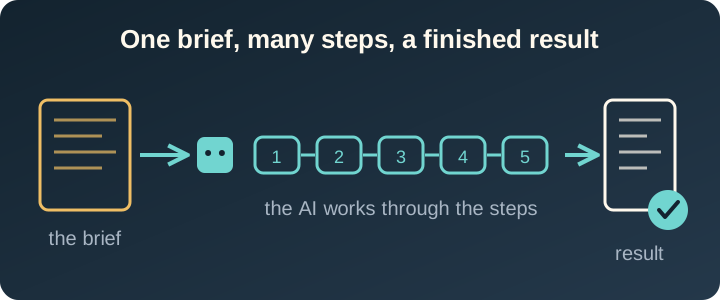
Describe the finished result, the material to use, the limits and how the result will be checked, then let the AI work through the steps. A good brief takes five minutes and saves an afternoon of back-and-forth.
Starter: "Here is the job: [result wanted]. Use only [these documents or sources]. Do not [limits]. When you finish, list what you did, what you could not do, and how I can check the result."
On an ordinary job: "Turn these three supplier quotes into a one-page comparison and a recommendation, using only the quotes, and flag anything they leave unclear."
2. Run several AI workers at once
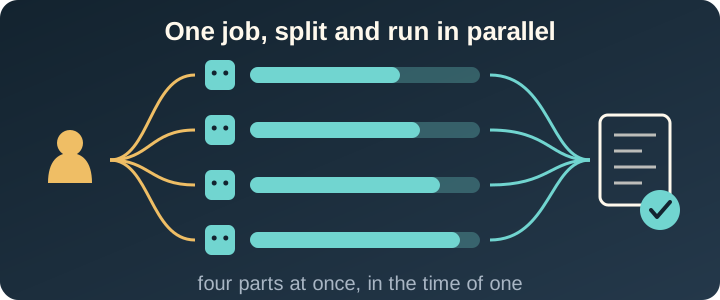
Split a big job into independent parts and give each part to its own AI worker at the same time. Three fact-checkers working in parallel take the time of one. Most current AI tools allow several chats or agents to run side by side.
Starter: "Split this job into independent parts that can be done at the same time, and write a short, self-contained brief for each."
On an ordinary job: checking a long report chapter by chapter, with one worker per chapter.
3. Make one AI check another
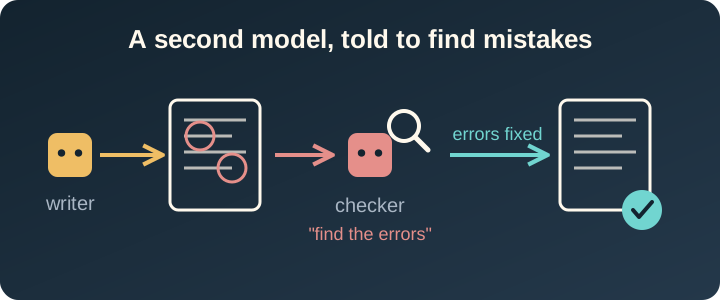
Give the finished work to a second AI, ideally from a different company, and ask it to find mistakes rather than to agree. This catches the confident slip a tired person misses: in one Evidence Press film script it caught a number read out ten thousand times too large.
Starter: "Your job is to find errors in the work below, not to praise it. List every factual, numerical or logical mistake you can find, most serious first, and quote the exact words each one concerns."
On an ordinary job: checking a budget, a contract summary or a press release before it goes out.
4. Turn every repeated job into a recipe
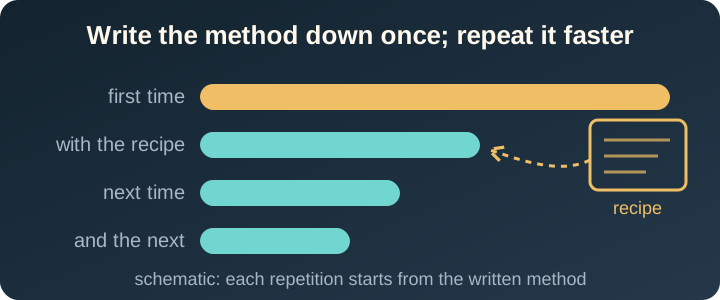
The first time a job is done, ask the AI to write down how it was done: the steps, the checks and the mistakes to avoid. Next time, start from the recipe. Each repetition gets faster and more reliable.
Starter: "We have just finished this job. Write a reusable recipe for doing it again: the steps, the inputs needed, the checks, and the mistakes we made and how to avoid them."
On an ordinary job: the monthly report, the weekly newsletter, onboarding a new client.
5. Keep a notebook the AI reads
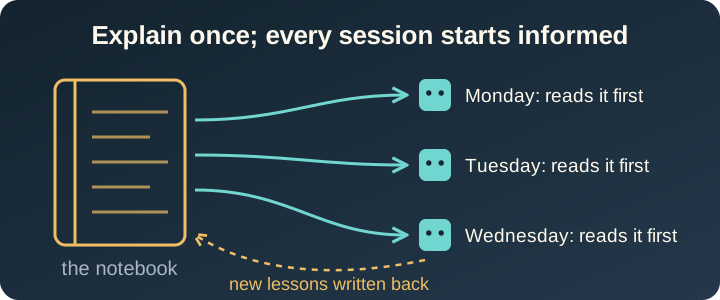
Keep one short document of standing instructions, preferences and lessons learned, and give it to the AI at the start of every session, or store it where the tool reads it automatically. Nothing then has to be explained twice.
Starter: "Read my notebook below before we start. At the end of the session, suggest any lessons worth adding to it."
On an ordinary job: house style, who the customers are, the decisions already made and why.
6. Keep the decisions human
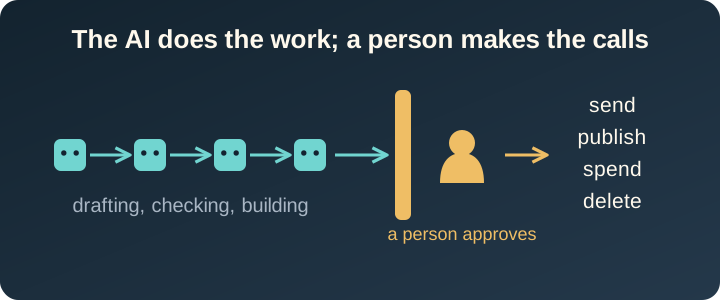
Decide what is worth doing, approve what goes out, and answer for it. The AI can do almost every step, but the choice of goals, the final judgement and the responsibility stay with a person. Agree in advance what the AI may do without asking and what always needs a yes.
Starter: "Before doing anything that sends, publishes, spends or deletes, stop and ask me."
See it working
The picture at the top of this page is every Evidence Press research release so far: 169 covers, in publication order. Evidence Press is a live, public benchmark of these habits. In twelve weeks one person published 169 research results, including exact answers to two problems posed by Paul Erdős, seven long-form articles, 171 films and a book, for about $500 a month.
Measure your own gains
How much the habits help depends on the job. The two-week self-test compares the same recurring tasks with and without them, recording time, rework and quality, and takes about two minutes per task. Results can be shared, anonymised, with the open results ledger.
Earlier experiments
Before these habits, the programme tested eight detailed workflow protocols. Benchmarks found that heavier versions cost more without better results, which is why the advice here is simple habits rather than elaborate procedures. The protocols and their test results are kept on the testing page.